
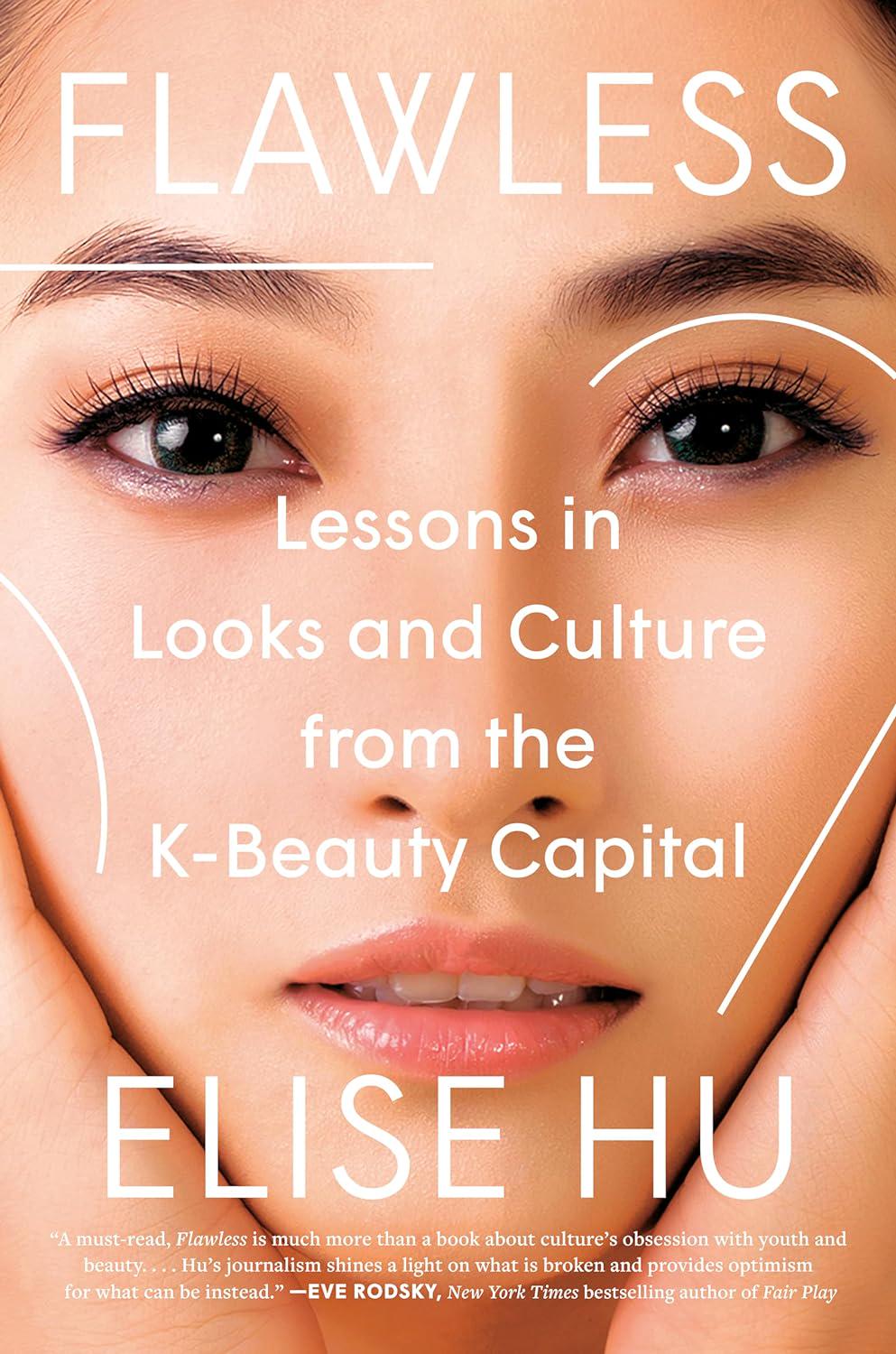
Hello, I finished reading Flawless: Lessons in Looks and Culture from the K-Beauty Capital by Elise Hu and wanted to share my thoughts on this book in this space for Asian Beauty enthusiasts. I know this is a little off the beaten path of what’s usually discussed here, but I figured some folks here may have an interest in reading this book as well!
This book is a blend of a memoir and journalism of the author’s several years stay in South Korea while she was the NPR bureau chief of the S.K and Japan region.
I think a lot of us foray into AB hoping to look for ways to improve our skin and have fallen into the rabbit hole of new fangled ingredients, multiple steps, sheet masks. Along the way though, I’ve noticed a lot of discourse surrounding AB that I see pop up on this subreddit from time-to-time. Questions discussing brightening of skin tone/colorism, beauty standards in Asia, the effects of social media on how we evaluate ourselves, the commercialization of self-care.
I came into the book with the expectation of gaining more perspective or challenging my current thoughts and understanding of beauty. Asking myself, where do I stand in this fabric? How much of my choice is actually my choice or choices that were given to me by society’s expectation of my gender? I was born in Asia, and immigrated to the States as a toddler. I think at times in what ways would I differ if I was grew-up in a hyper-visual society because that was certainly a possibility.
Depending on how familiar you are with South Korean “soft power” that’s been nearly inescapable on the internet, some of this book may be a review for you. I knew of the discussions surrounding claims that Asians undergoing blepharoplasty (double eyelid surgery) or trying to be pale as trying to look more caucasian. There is a section of this book that refutes those claims by tracing the history of these beauty ideals while also acknowledging the history of western military occupation of Korea.
For me, the strength of this book was its interviews, that it included perspectives from different angles to address a topic. This includes interviews she conducted with South Korean women, ranging from feminists to the Korean-American ajummas at the senior center. I enjoyed the nuance that these perspectives were able to bring certain discussions, even perspectives that I didn’t necessarily agree with, such as her interview with a plastic surgeon.
Where this book falls a little short, is perhaps my expectations that there could be further discussions and analysis of the information that she presents in the book. There were also a mistake about phentermine in the section about body size, where the author incorrectly wrote it was a narcotic, and wrote that amphetamine was prescribed in the US for weight loss when I think she meant to write phentermine. This did make me wonder how much I could take the research in the book at face value, but I suppose anything you read should be taken with a grain of salt.
This book was published in 2023 – and somewhat interesting to note that the fast-paced K-beauty may in some ways have already made parts of this book out-dated when discussing what was trending during her time in South Korea. However I think the underlying questions are more relevant than ever and would recommend AB-enthusiasts to read and explore.
Overall book rating: 3.5/5
by wrlddmntr